In short
Vouchernaut was a voucher site when I started it in 2016. Between 20 September and 20 November 2026 I rebuilt it as a UK shopping guide. Thirty kinds of page share one design language. The site earns in four ways, with a rule on each to keep commission from changing what a shopper sees.
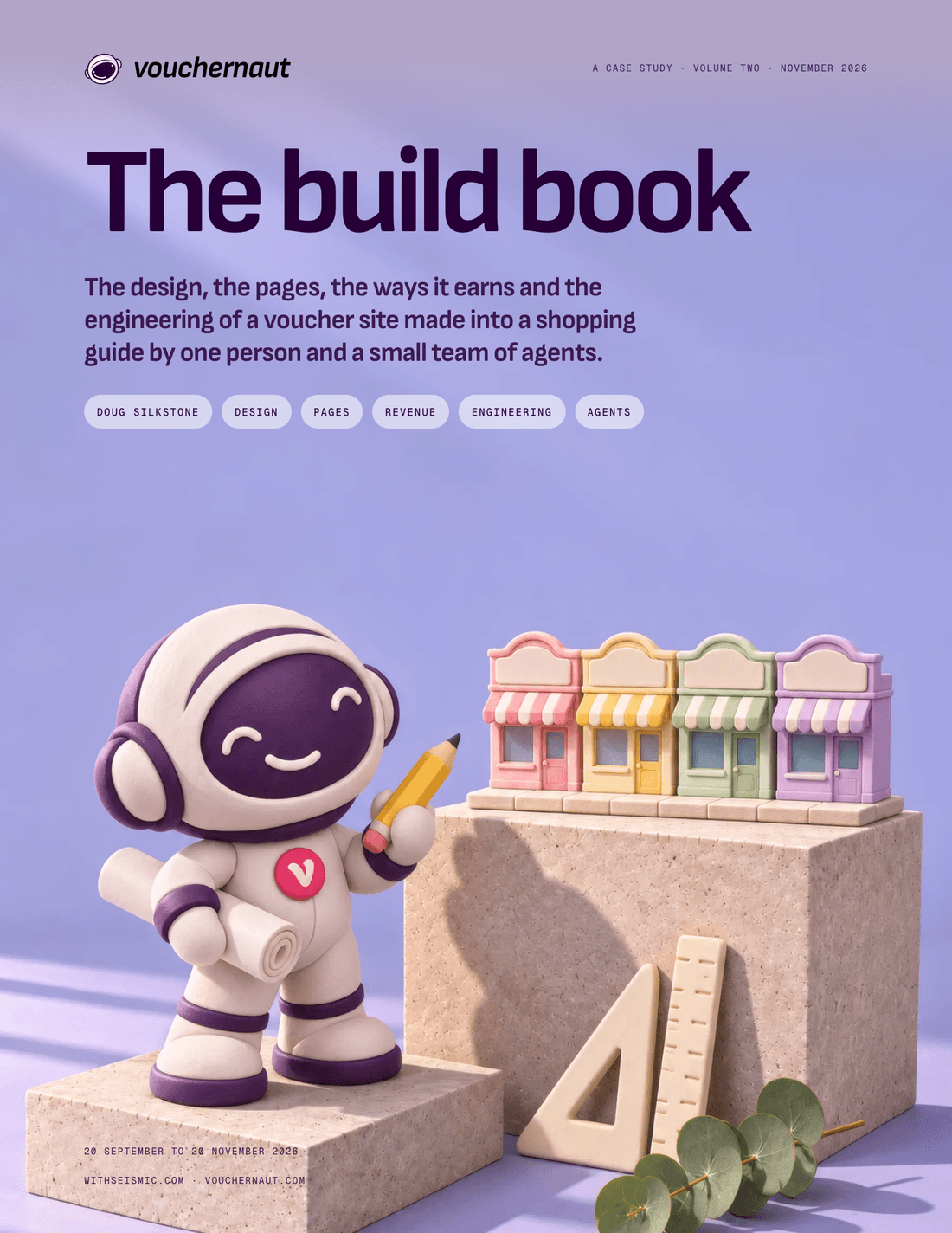
I direct a small team of agents that does the building. Over those 62 days we made 1,587 commits and opened about 580 pull requests, and the code came to about 845,000 lines. I put the full record in a 69-page PDF, The build book.
Why I rebuilt the voucher site as a shopping guide
A voucher site lists shops' discount codes and gets paid when a shopper it sends goes on to buy. Most shoppers are already at the checkout when they look for a code, so something else got them there. What brands want to know from every voucher site is whether the sale would have happened anyway.
To answer that, I needed Vouchernaut to be useful before someone had picked a shop. I put prices from different shops side by side and gave shoppers a price history. I added the cost of bills and subscriptions and a place to see what's on this weekend. The guides use live price data.
I wrote about the site's history and the first 22 days in the first volume of the case study, The one-man band.
One design language for the whole site
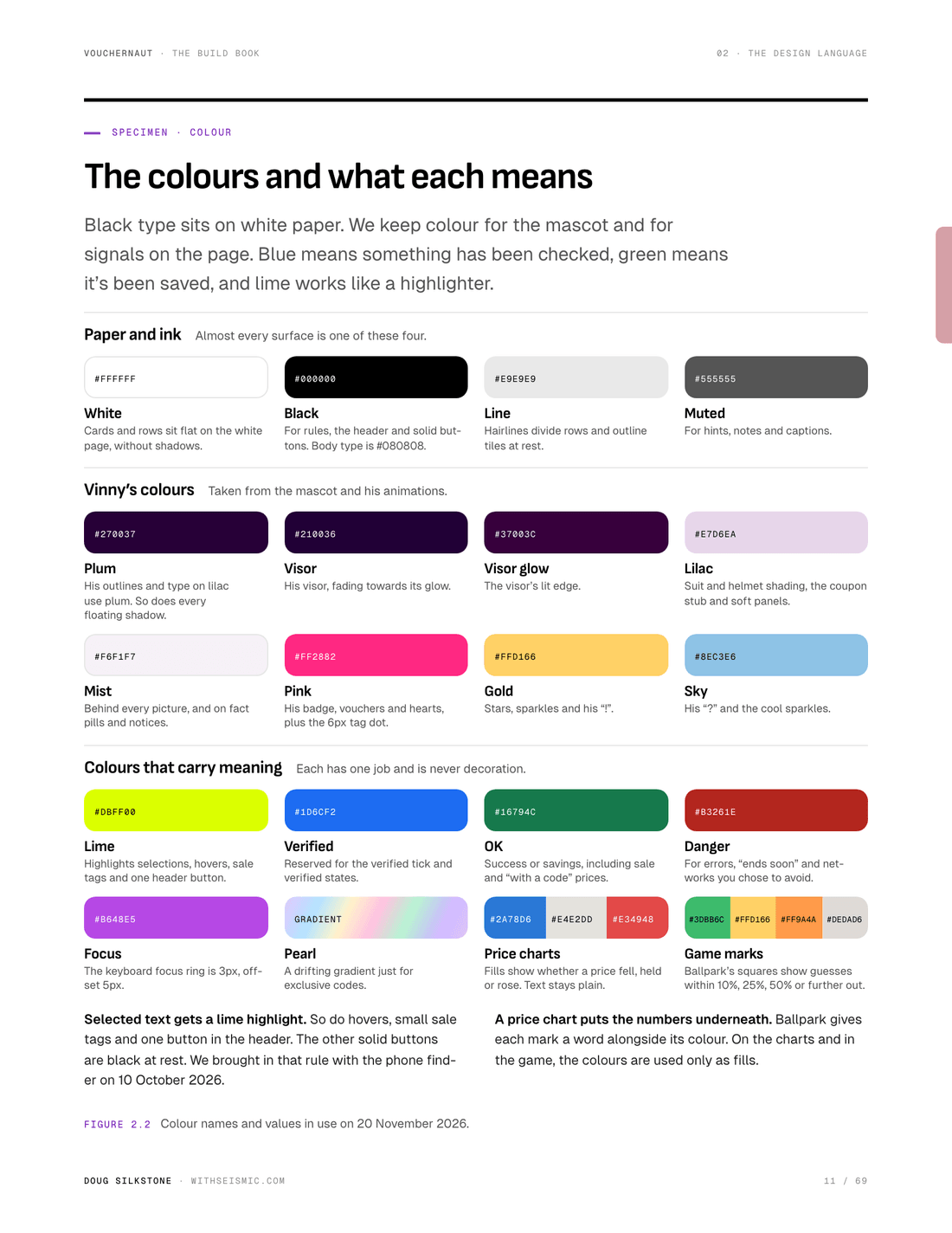
I set the site in black type on white paper. Blue means something has been checked and green means a saving. Lime only goes where I'd use a highlighter pen. I set the labels and prices in a monospaced face so the numbers line up. Hairline rules separate the offers, with one button per row.
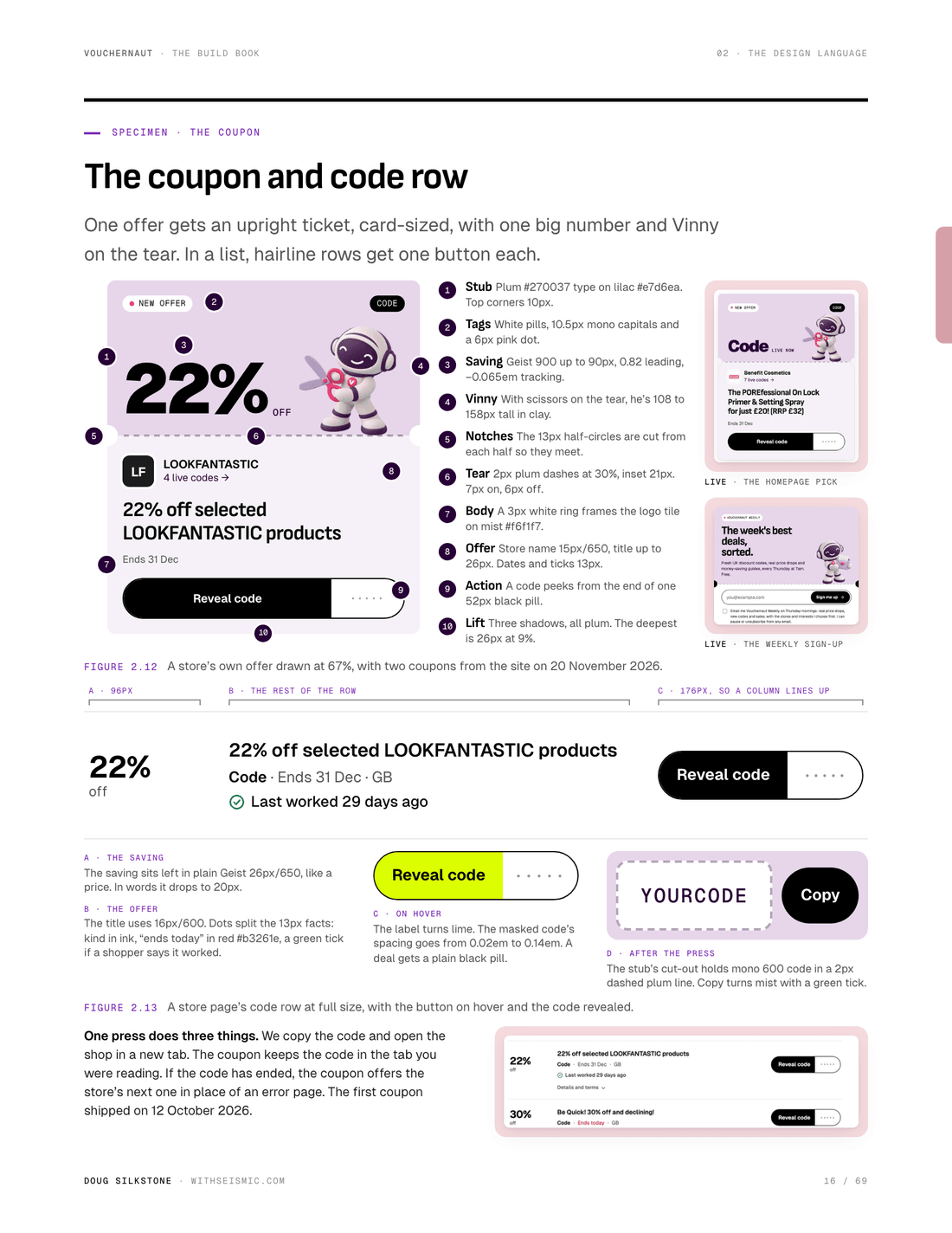
Two details give the site its character. I drew one offer on the homepage as a card-sized coupon with a perforated edge. I remade Vinny, the astronaut mascot, in clay and gave him the scissors.
I laid out the design elements as specimens in the book. Each has its actual values beside the rule for using it.
Thirty kinds of page share one catalogue
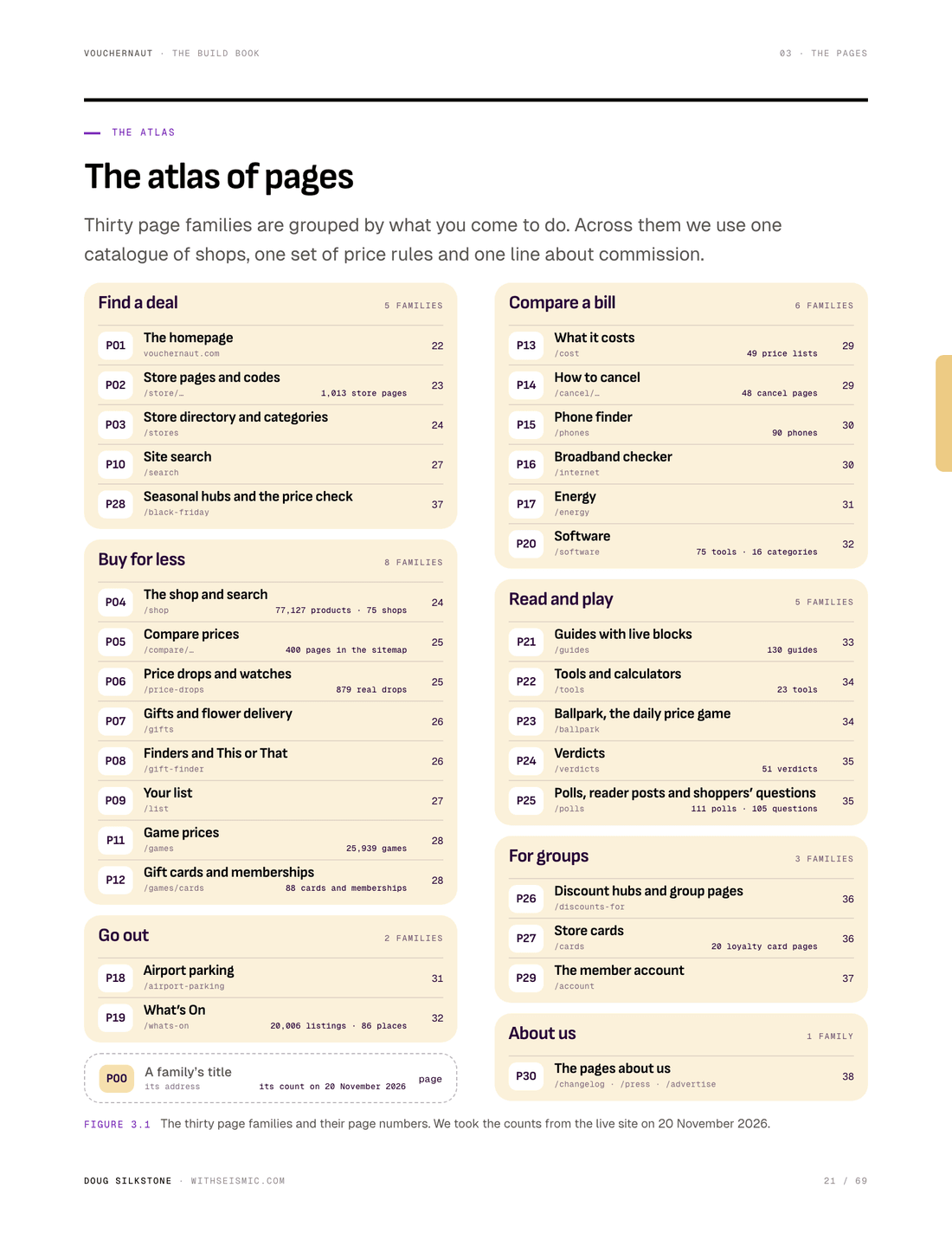
On 20 November 2026, the homepage gave the counts as 1,013 UK shops with codes, 879 real price drops, 25,939 games compared across shops and 130 guides. The catalogue behind it held 77,127 products from 75 shops. What's On had 20,006 listings. There were 49 price lists for subscriptions and memberships and 48 pages on how to cancel them.
Some of these pages do things you wouldn't usually find on a voucher site.
- Price drops. I list a drop only when the shop held the higher price for 28 days.
- Store codes. I show the code when a shopper presses the button. That press copies the code and opens the shop.
- Product comparisons. I match products across shops. A guide to air fryers can then show each model's price at every shop that sells it.
- Phone prices. I put the upfront cost and the total beside the monthly price. Each announced rise goes there too.
- Cancellation pages. I built some pages to earn nothing. On a page about cancelling a subscription, I say so.
Four ways the site earns
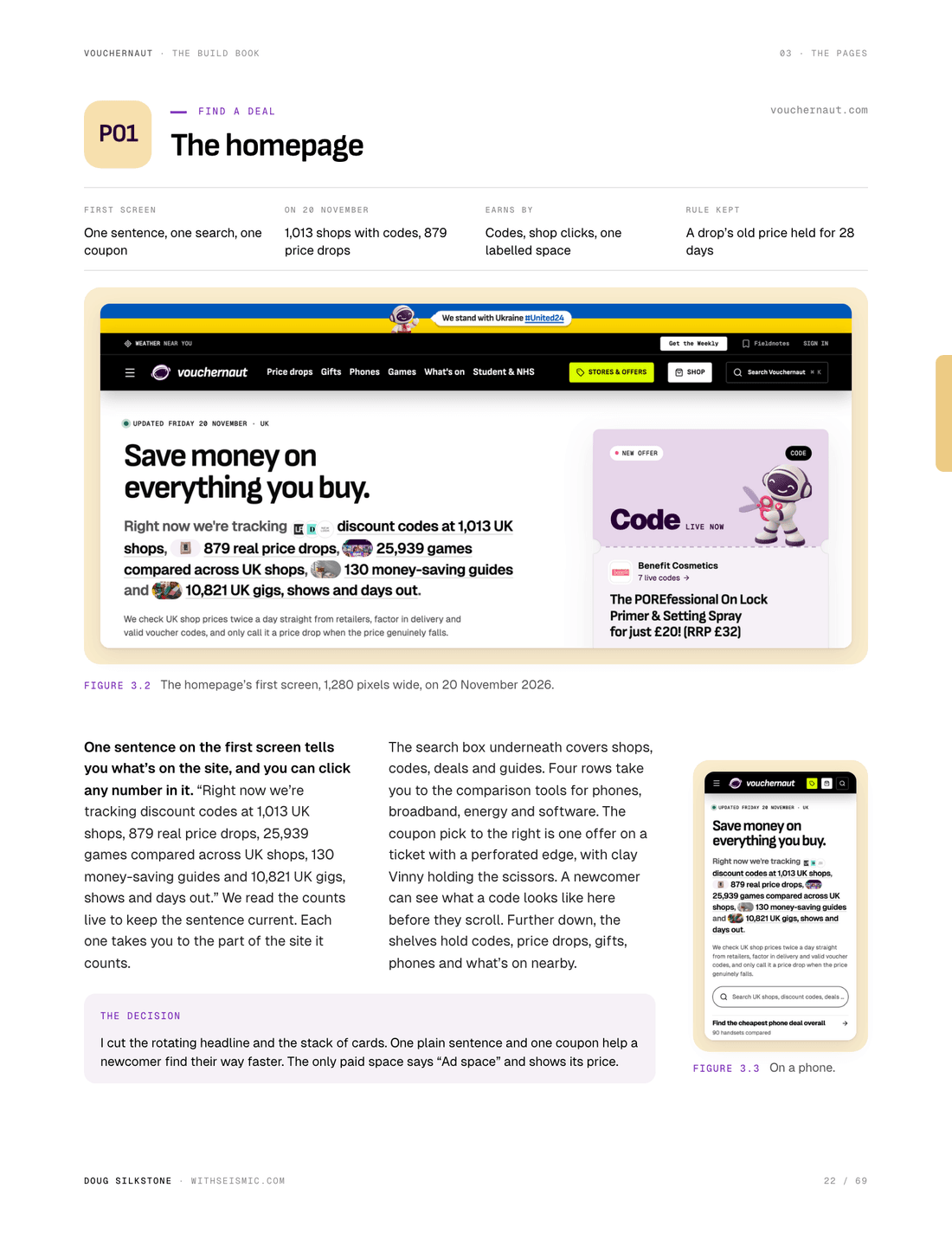
I use the site's own outbound route for every link Vouchernaut earns on. There are four kinds of payer. A shop pays commission through its affiliate programme on a tracked sale, and a software maker pays for a direct referral. A brand pays a fixed, published price for a labelled sponsored space, and it can also take a flat monthly plan to run verified offers on its own site. The pricing page says "We never take a share of your sales."
Commission never changes which listings a shopper sees or their order. Since 28 October 2026, each page has said once, beside the offers, that we may earn commission. I tell the shop which channel sent the click. It might be a guide or a comparison page. The shop gets no detail on how the visit began.
How the site works for shoppers and AI assistants
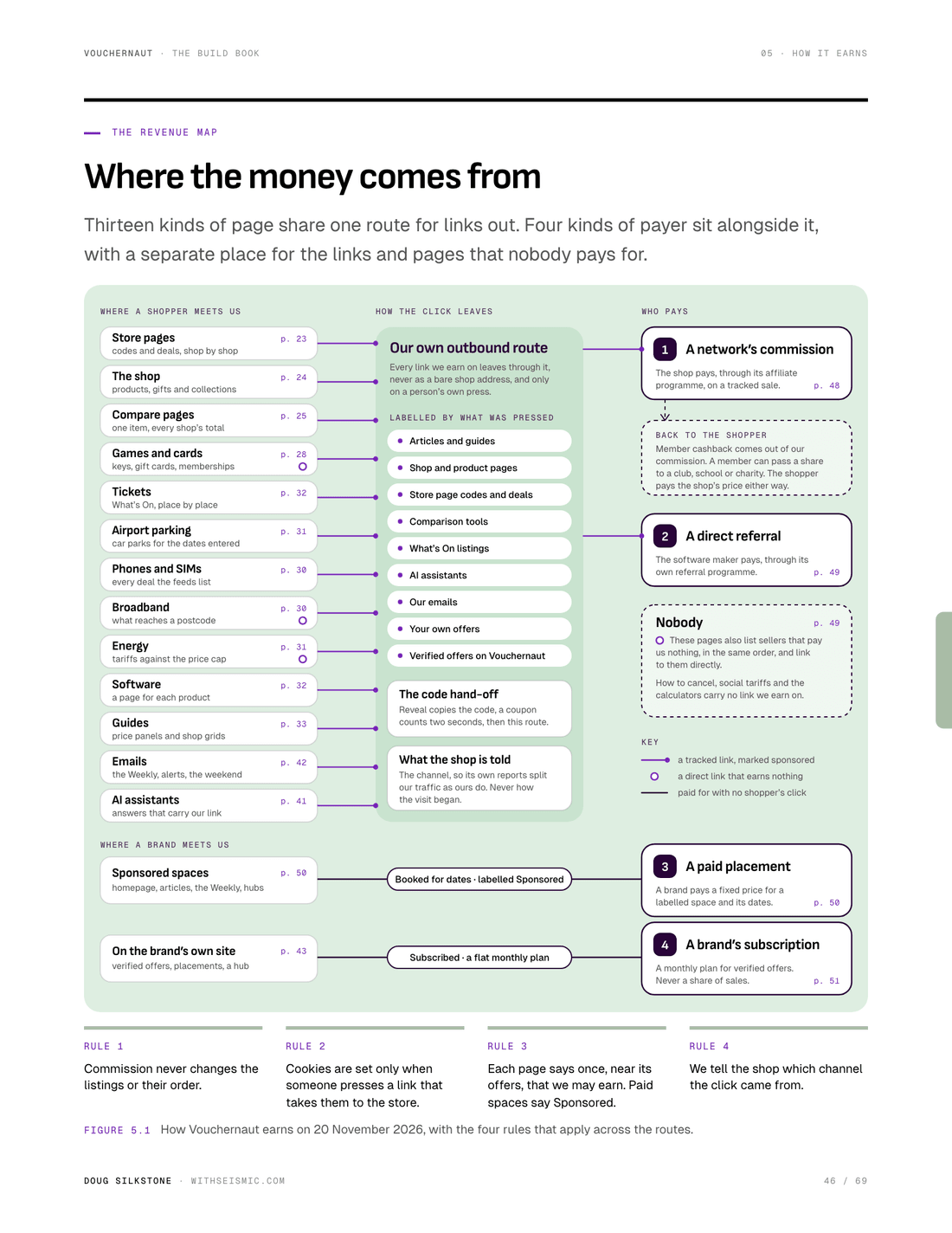
By 20 November the codebase held about 845,000 lines of code and 1,002 test files. When two parts of the product have to agree, I write the rule once. The site, the brand console and the app all read the same rules for things like how to show a price. Some of the tests check the words on the page. A price claim the site can't back up fails the build.
An AI assistant can connect to Vouchernaut and use nineteen tools to look up codes, prices and deals. Since 4 November, an agent in the shopper's own browser has had twelve more tools across ten kinds of page. Every answer includes the same tracked link a shopper would press. I give the assistant only text I'd show to a person.
How I run the agents
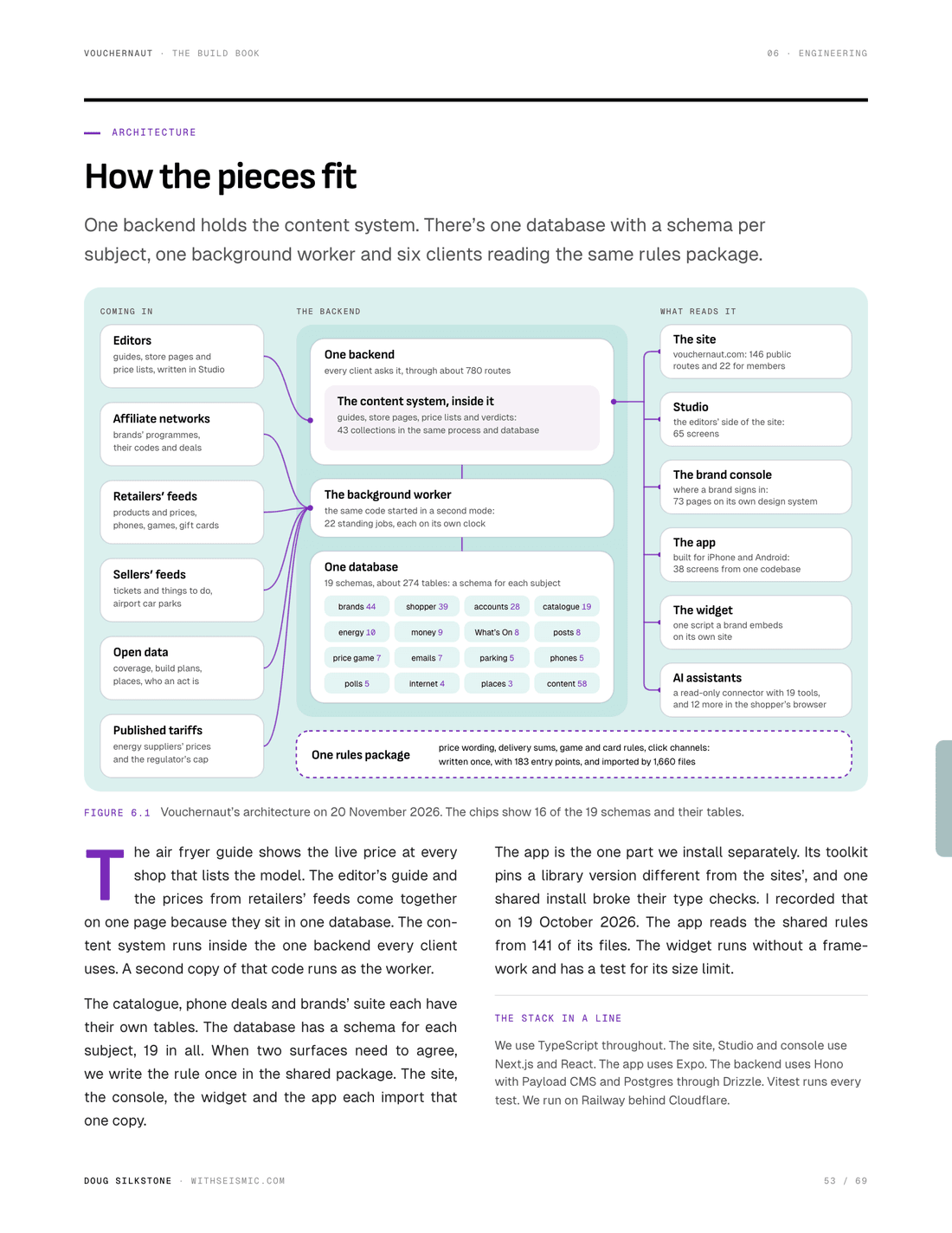
I use agents in six roles on Vouchernaut, with separate jobs for builders and reviewers so a builder never reviews its own work. A researcher changes nothing. I also use agents to write and make the art, and to run the desks.
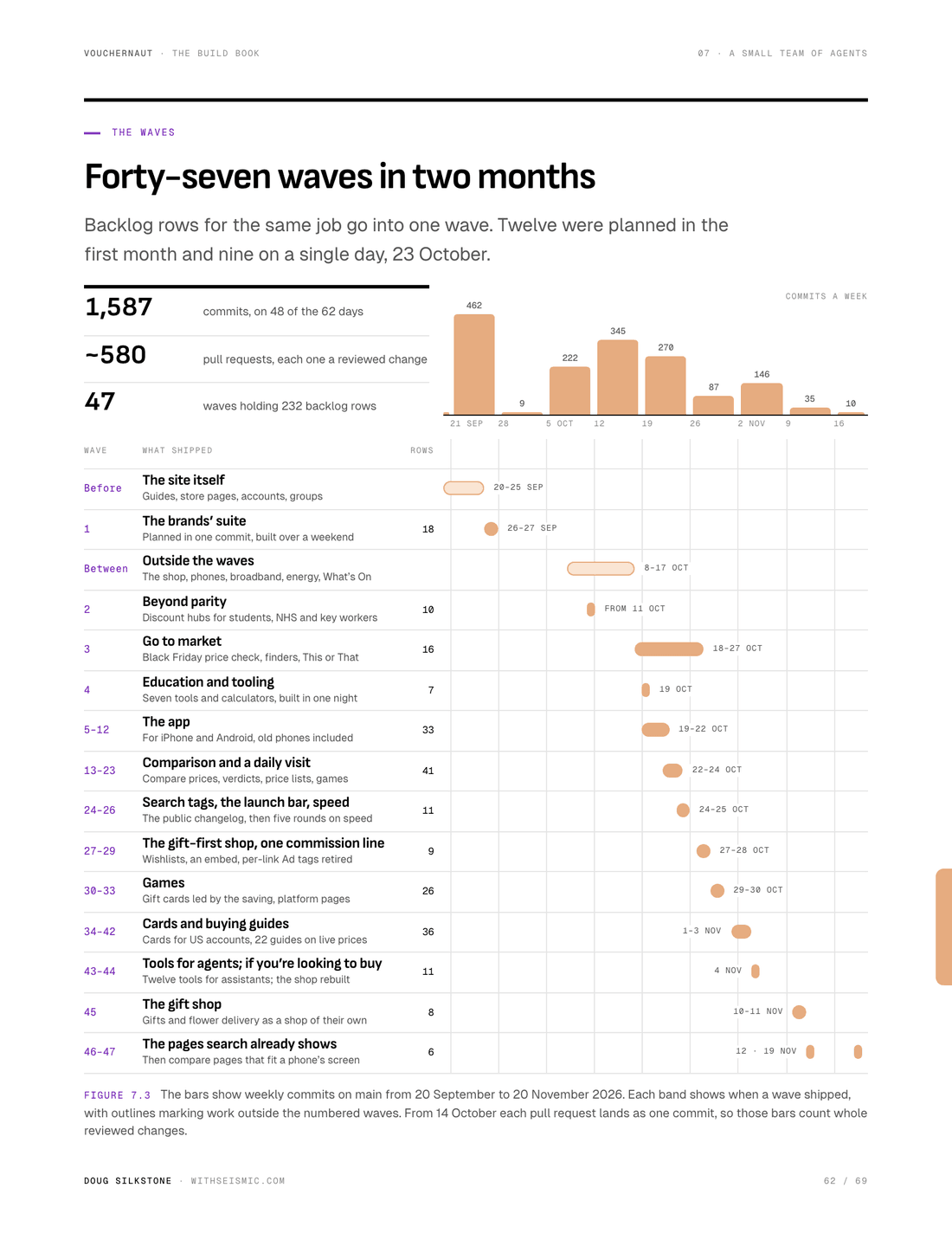
An agent starts each job with no memory of the last, so I keep the plan on paper. The backlog has 232 rows grouped into 47 waves, and I keep a record of 55 dated decisions. When a change ships, the agents write it down. The public changelog comes from those same lines.
I write the brief for each wave and choose between the options. I also sign off on anything that leaves the building and decide when to stop. The checks catch mistakes, but I make the call on what is worth building and what a page should refuse to do.
How this way of working applies beyond voucher sites
I'm the one who answers for the design, the engineering and every release, while the agents do most of the typing. The same arrangement applies beyond voucher sites. I write down the plan and the decisions where the next person can read them. I test the rules the business has to keep the same way I test the rest of the code.
The build book is where I kept every decision, along with every page family and design element. Download the 69-page PDF.
Frequently asked questions
- What does Vouchernaut do?
- I started Vouchernaut as a voucher site in 2016 and rebuilt it as a UK shopping guide. On 20 November 2026 it had codes at 1,013 UK shops and compared 77,127 products from 75 shops. It also compared 25,939 games and had published 130 guides.
- How long did the rebuild take?
- I started with an empty repository on 20 September 2026. The build book runs through the 62 days to 20 November 2026. In that time we made 1,587 commits and opened about 580 pull requests. The code reached about 845,000 lines.
- How does Vouchernaut earn money?
- The site earns in four ways. Shops pay commission on tracked sales and software makers pay for direct referrals. Brands can buy a sponsored space at a published price or take a flat monthly plan. Commission never changes which offers appear or their order. Each page says once that we may earn it.
- How did you divide the work with the agents?
- The agents built and reviewed the work. They also did the research, wrote copy and ran the standing desks. I set each wave's brief and chose between the options. I signed off on anything that left the building and decided when to stop.
- Where can I download the full case study?
- The build book is a free 69-page PDF you can download from this page. It covers the design language and thirty kinds of page, as well as how the site earns and how it is built.
Sources
- Vouchernaut: UK discount codes, real price drops and money-saving guidesVouchernaut, checked 20 November 2026
- Price dropsVouchernaut, checked 20 November 2026
- What's new on VouchernautVouchernaut, checked 20 November 2026
- Vouchernaut for AI assistantsVouchernaut, checked 20 November 2026
- Advertise on VouchernautVouchernaut, checked 21 November 2026