On 20 September 2026, the Vouchernaut repository was an empty starter. Twenty-two days later, on 12 October, vouchernaut.com had fifteen live products on it, from checked codes for 995 UK shops to a platform for brands with its own Shopify app. Behind them were 772 commits and about 530,000 lines of code, 145,000 of them tests.
I did every job myself: product, design, engineering, operations and selling. Agents did most of the typing while I wrote the specs, made the calls and checked the work. This is how that went, and why I came back to a site I started ten Black Fridays ago. There's a longer version too, with every feature and decision in it:  the 40-page case study as a PDF.
Where it started
In 2016 I was on Vouchercloud's paid search team, working on an international voucher marketplace. It showed me how a voucher business works from the inside. Most of the work is finding offers, checking them and writing much the same page for the next store. I wanted to know whether software could do that writing, and whether a voucher site could win search traffic without a content team.
Vouchernaut was the test. It listed offers for more than 100,000 brands, and each brand's offers became a page built from data rather than written by hand. It reached 250,000 sessions a month with no paid spend, at 90% margins, and I ran it alone for six years.
The software under it changed three times. It started on WordPress with a coupon theme and a magenta rocket, and by 2018 the homepage led with its own exclusive code at Theatre Tickets Direct, as the Internet Archive's October 2018 capture shows. A code like that took a conversation with the brand, and it gave readers something no other site had. In October 2019 the site relaunched on Gatsby with a headless CMS, and an astronaut arrived with it. In January 2022 it moved to Next.js. Vouchernaut ended in November 2022.
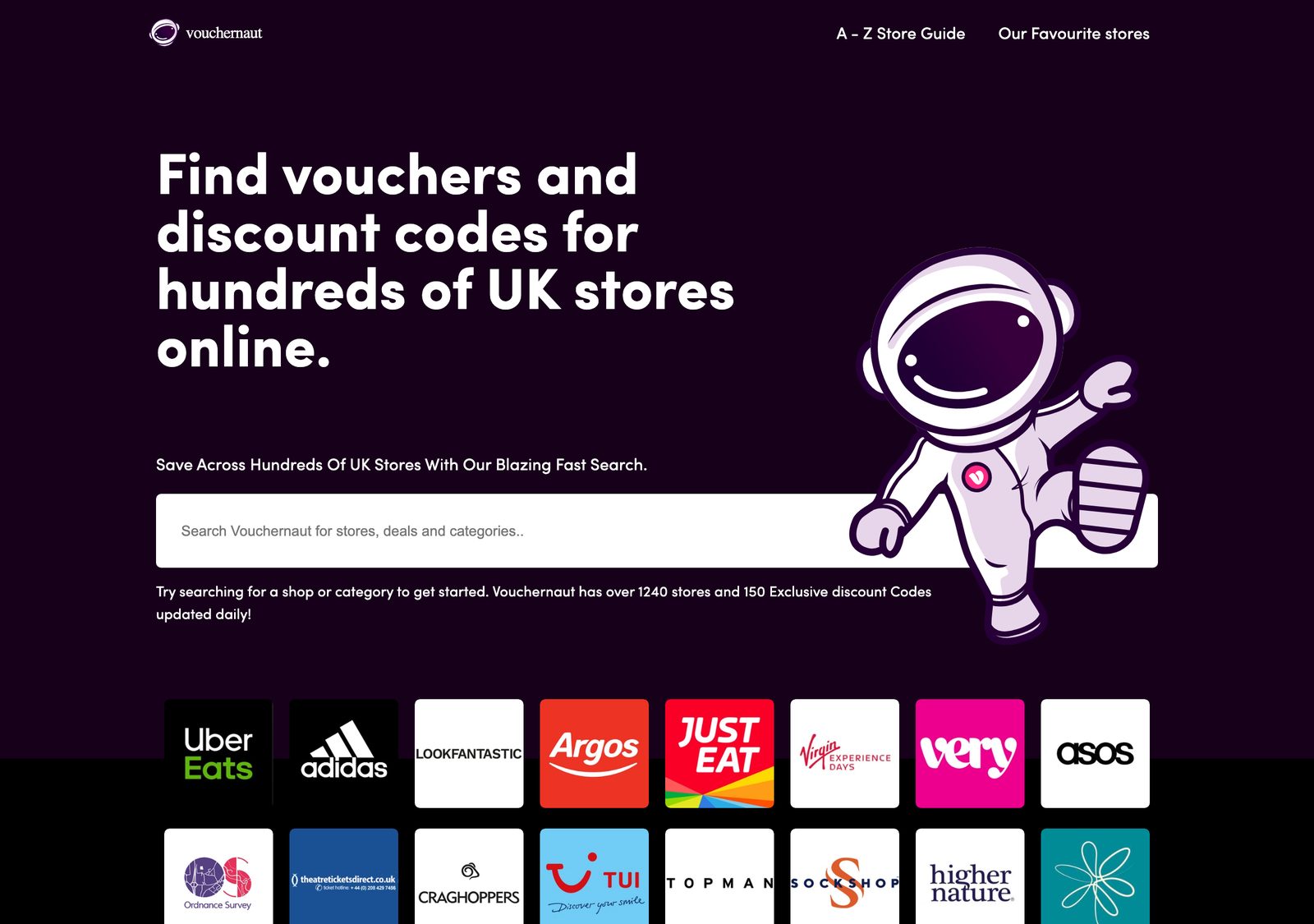
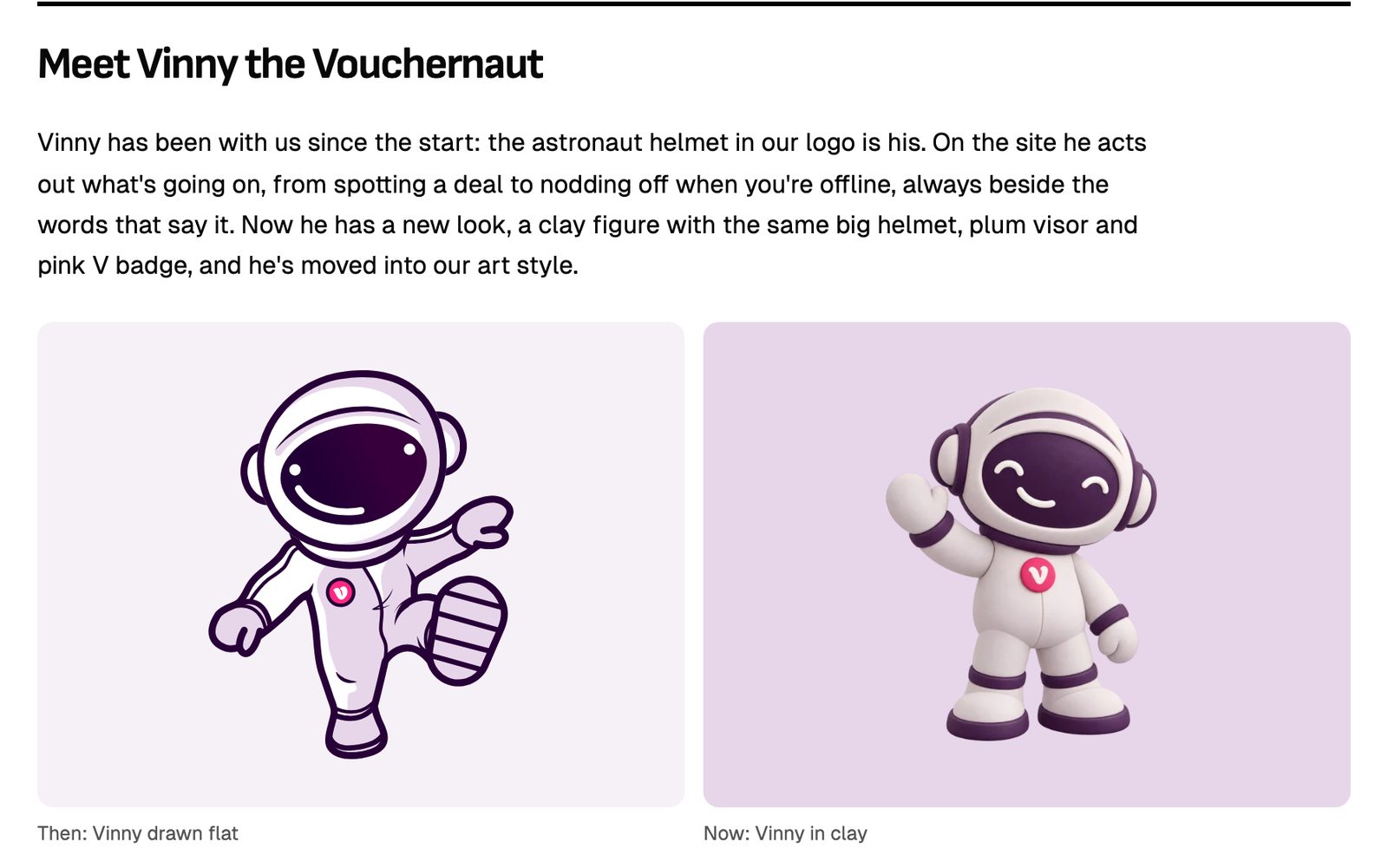
That astronaut, with the pink V on his chest, is still the mascot. He's called Vinny now, and he's made of clay.
Why I came back
While the site was quiet, the industry it belongs to got a reputation problem. In December 2024 a YouTube investigation alleged that PayPal's Honey extension took credit for sales that creators and publishers had referred. In January 2026 the networks acted: Rakuten Advertising removed Honey,
impact.com followed, and
Awin said its investigation had confirmed breaches of its publisher policies. Brands started asking every voucher site the same fair question. Would that sale have happened anyway?
Search had turned on voucher sites too. Google's site reputation abuse policy hit publishers' voucher sections hard from 2024. Then assistants started buying, and
OpenAI launched Instant Checkout in ChatGPT in September 2025. A list of codes gives an assistant very little, but checked prices and full costs give it plenty.
In 2020 I'd told brands, in writing, that a small voucher publisher can add sales a brand wouldn't otherwise make, and show its working. I'd never fully proved it. So the new Vouchernaut had three jobs:
- Help before the choice. Comparison tools, guides and a shop that help people decide what to buy and where, rather than a list of codes.
- Prices that hold up. "Down from" appears only after the old price held for 28 days, and no monthly price appears without its total.
- Every click labelled. Every click to a store carries one of ten channels, so a brand can see what sent the sale instead of taking it on trust.
Agents meant one person could build all of it. I'd tried a first version over the summer, from June to July 2026, and kept its ideas but none of its code. The same way of working rebuilt Benson in ten days. At 13:29 on 20 September, I made the first commit to an empty repository.
Three weeks, in two sprints
The code went in during two sprints. The first ran from 20 to 27 September and holds 463 commits: articles, store pages and the editing studio, accounts and the cashback ledger, the Chrome extension, the design system, group cashback pages and the advertising rate card.
Its two biggest days were the brand platform. I planned it in one sitting on the morning of 26 September as a record of locked decisions, a backlog and numbered product requirement documents, or PRDs. Each PRD says what a feature does, why it exists and what done looks like. Agents then built it PRD by PRD over the next 26 hours: a console, a partner API, an embeddable widget and a Shopify app.
Between the sprints, the work moved outside the code. I joined brands' programmes, checked every approval before it got a page and wrote store pages, the first 76 of which went live on 1 October.
The second sprint, from 8 to 12 October, added 295 commits and most of what shoppers see today. The shop arrived on 9 October, then phones, broadband and energy on the 10th. Polls, maps, price watch, the Weekly, What's On, airport parking, software and the discount hubs all landed on the 11th, and the server for AI assistants and the press kit on the 12th.
How the work was split
I wrote what to build and the rules it had to keep. Agents did the typing across 203 Claude Code sessions and 615 subagent runs, many of them in parallel, each session in its own copy of the repository so several features could be built side by side. Codex, OpenAI's coding agent, worked alongside them and rendered Vinny's clay scenes to the house style I set.
Three things kept that much parallel work pointing the same way:
- Specs before code. Every feature got a PRD before or with its code, so each session started from what done looks like rather than a guess.
- A written manual. The repository carries one manual that every session works from. For each feature it says what the feature does, the rules it keeps for shoppers and the legal limits it stays inside. When I settle something, it goes into the manual, so the next session keeps to it instead of deciding it again.
- Nothing merges unseen. I check each result against its spec before it goes live. When the voice or the design is off, it goes back with a note, and the note goes into the manual too.
What got built
Fifteen products went live, all sharing one catalogue of UK stores. The homepage on 12 October lists most of them with their live counts.
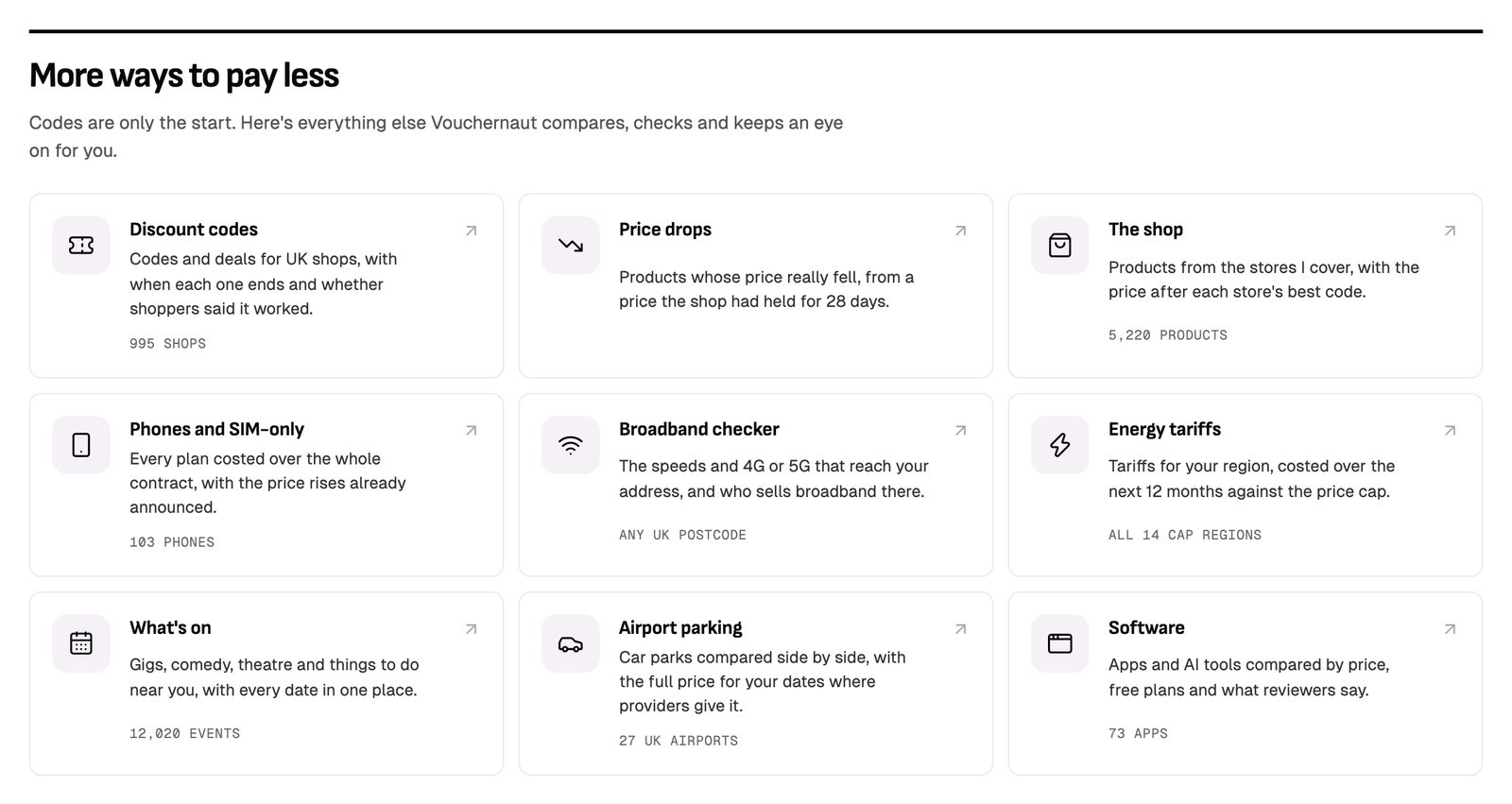
- Store pages and codes for 995 UK shops, each with an introduction and a shopping guide, and codes that arrive through the day from the stores' own programmes.
- The shop and price watch: 5,220 products from 21 stores, priced with their codes. A watched product gets one email the morning after its price drops.
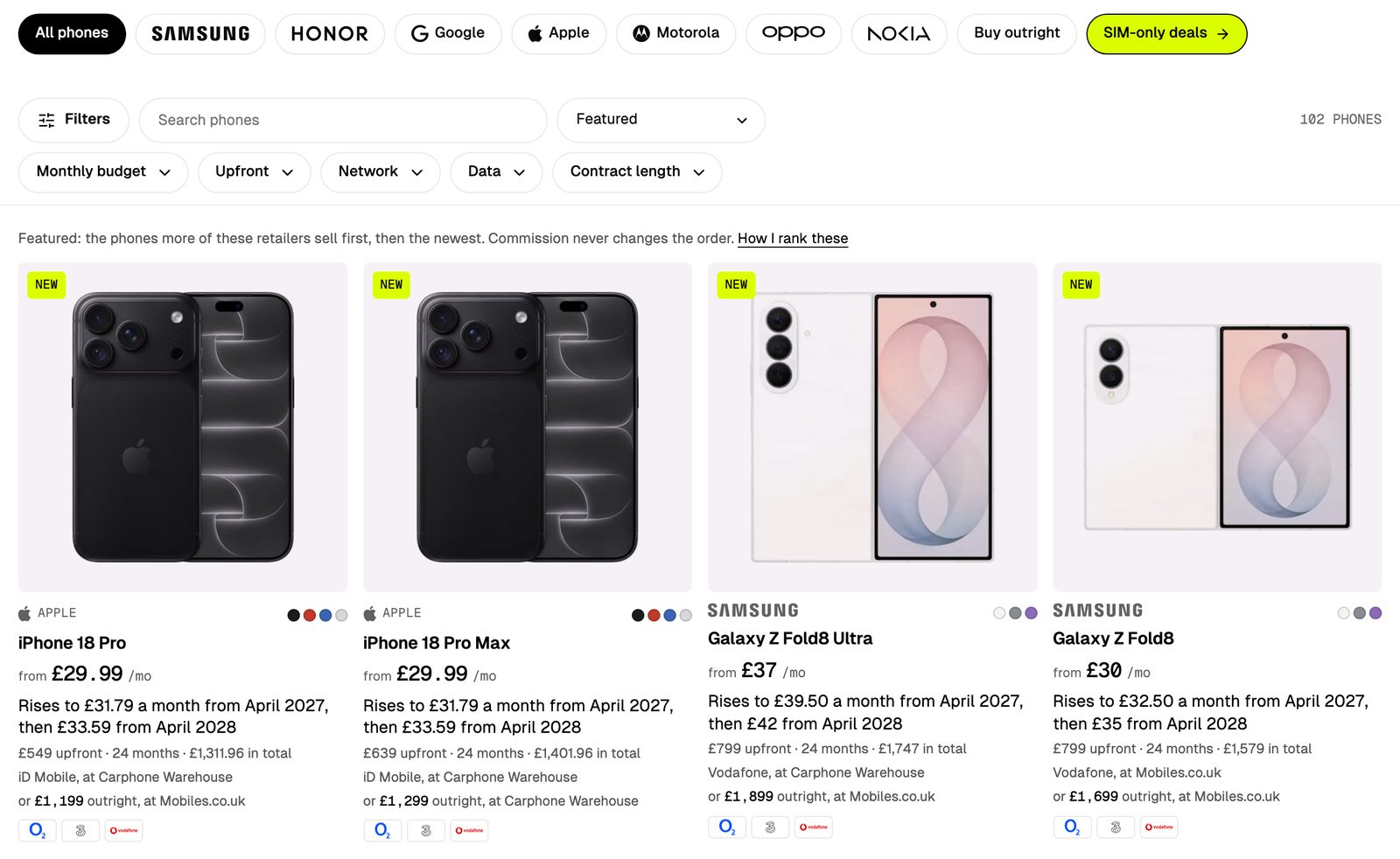
- A phone finder for 103 phones and 235 SIM-only plans, priced by the whole contract, with
every announced rise under the monthly price.
- A broadband checker for every UK postcode, built on Ofcom's open data, and an energy comparison that costs suppliers' published tariffs against the price cap in all 14 regions.
- What's On: 21,087 events, shows and things to do in
- Airport parking at the UK's main airports, a software section, 76 researched guides with live shop grids, maps and polls inside them, and Vouchernaut Weekly, a Thursday deals email.
- Discount hubs for students, the NHS, blue light, teachers, the military and key workers, where a shopper can
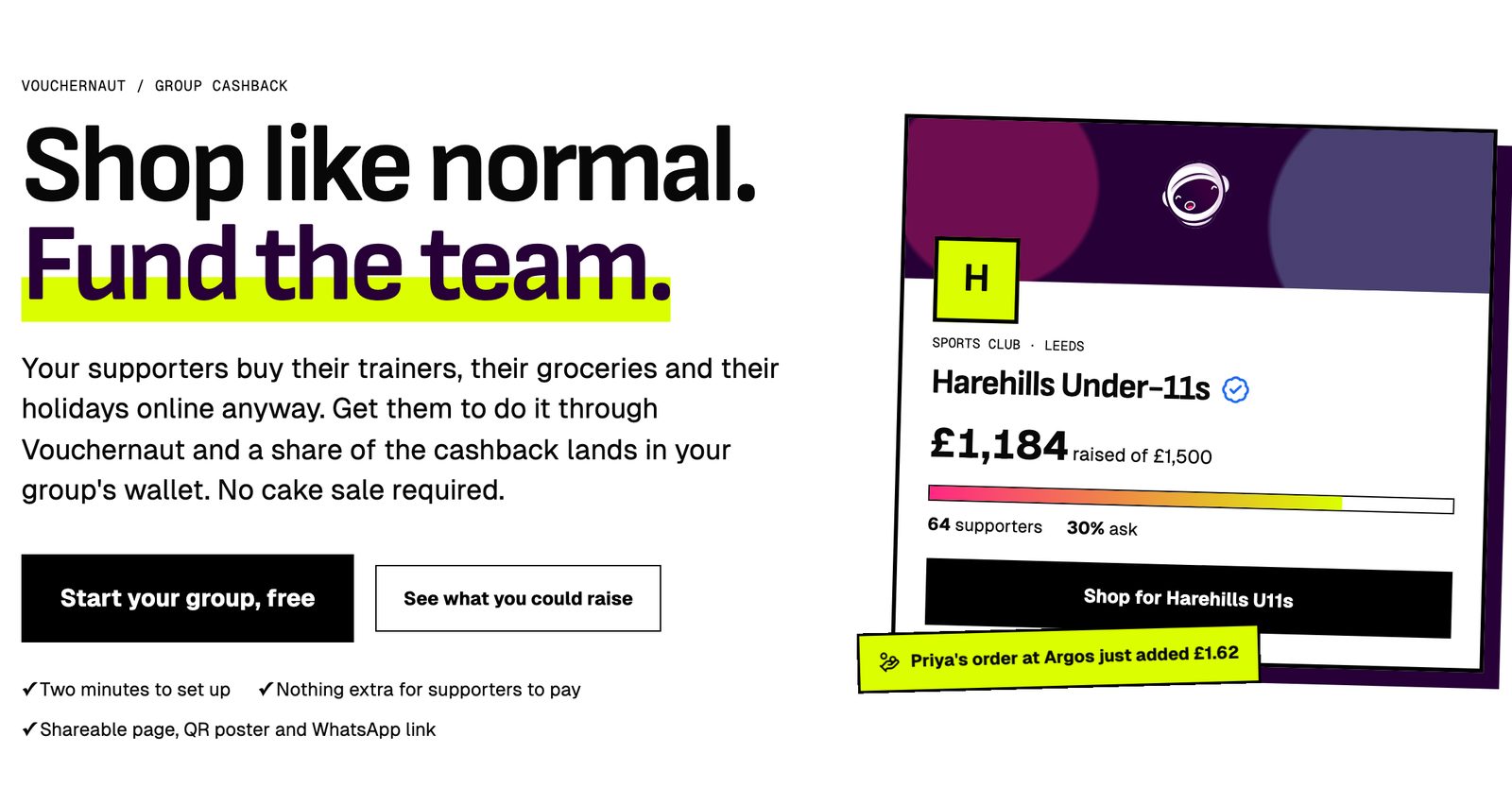
- Group cashback, which lets clubs, schools and charities raise money from their supporters' everyday shopping.
- A Chrome extension, and a server for AI assistants listed in the official MCP Registry, so assistants can look up live codes and prices.
- Vouchernaut for Brands at
brands.vouchernaut.com: verified offers on a brand's own site, placements, an offer hub, reports, plans from free to £199 a month and a Shopify app.
The bit I'm proudest of is group cashback. Each supporter picks the share their group gets, and the group's own page shows its goal and how close it is. A school or a football club can raise money from shopping its supporters were doing anyway.
The calls I made
Agents wrote the code, but what Vouchernaut will and won't do for shoppers and brands was my call. Each of these is now a rule in the code or the manual:
- No price without its fees. A ticket seller shows no price until its fees are checked, and a car park shows the total for your dates or nothing.
- Commission never sets the order. A provider that pays nothing is still listed, and every phone page explains how it ranks deals.
- Mark every paid link. Every link that can earn commission carries a visible Ad tag, so a shopper knows before they tap.
- Respect brands that refuse codes. Some brands welcome publishers but not voucher sites. They still get a page, with no codes and no cashback, and a plain line saying the brand's own price is its price.
- A click only on a tap. The extension sends a click only when a shopper taps, never when they copy a code, and it stands aside when another publisher sent them.
Design, and Vinny in clay
I was the designer too. The site has one set of design tokens and components with a page of its own, the brand console has a second system documented the same way, and new pages follow the phone pages' language: calm, plain, with prices set in mono.
Vinny has been the mascot since the 2019 relaunch. In 2026 I remade him in clay, with the same helmet and the same pink V, in a world of pastel sets and concrete blocks. He's on the homepage, in the press kit, on each discount hub in a uniform of his own, and on the cover of the case study.
What it felt like
Vouchernaut has always been a one-man band. In 2016 that meant a site that did one thing, because one person could only do one thing well. In 2026 it meant every job at once: deciding what to build, designing it, reading the law and the networks' terms, joining programmes, writing store pages and checking every result before it went live.
The agents didn't make those calls. What they changed is that one person could make all of them in three weeks and see each one live the same day. That's the work I do now, for my own products and for other people's.
vouchernaut.comVouchernautChecked codes for 995 UK shops, a shop, comparison tools for phones, broadband, energy and parking, and What's On across the UK.
Research and sources
Checked 2026-10-12. Next review: 2027-04-12. Listings and availability can change.
vouchernaut.com, captured 22 October 2018
Internet Archive · Checked 2026-10-12 · Primary source
The WordPress version of Vouchernaut, leading with its own exclusive code at Theatre Tickets Direct.
Internet Archive · Checked 2026-10-12 · Primary source
The Gatsby version of Vouchernaut on Black Friday eve 2020, with the astronaut mascot and the pink V.
Rakuten Advertising becomes first major network to remove PayPal Honey following attribution controversy
Affiverse Media · Checked 2026-10-12 · Secondary source
Rakuten Advertising removed Honey from its network in January 2026.
impact.com just kicked Honey off its network
PPC Land · Checked 2026-10-12 · Secondary source
impact.com removed Honey from its network in January 2026.
Awin Group statement on Honey investigation
Awin · Checked 2026-10-12 · Primary source
Awin said its investigation confirmed breaches of its publisher policies by Honey.
Publisher shopping revenue dealt blow on eve of Black Friday
Press Gazette · Checked 2026-10-12 · Secondary source
Google's site reputation abuse policy cut UK publishers' voucher-section revenue.
PPC Land · Checked 2026-10-12 · Secondary source
OpenAI launched Instant Checkout in ChatGPT in September 2025.
Vouchernaut · Checked 2026-10-12 · Primary source
The live products and their counts on 12 October 2026: 995 UK shops, 5,220 shop products and 103 phones.
Vouchernaut · Checked 2026-10-12 · Primary source
Every monthly price is shown with its upfront cost, length, total, seller and announced rises.
Vouchernaut · Checked 2026-10-12 · Primary source
What's On covers 86 places across the UK, with 12,020 events and 9,067 things to do on 12 October 2026.
Vouchernaut · Checked 2026-10-12 · Primary source
The discount hubs for students, the NHS, blue light, teachers, the military and key workers, verified once.
Vouchernaut · Checked 2026-10-12 · Primary source
Groups raise money from their supporters' shopping, with each supporter choosing their share.
Vouchernaut · Checked 2026-10-12 · Primary source
The brand platform: verified offers on a brand's own site, placements, reports and a Shopify app.
Vouchernaut · Checked 2026-10-12 · Primary source
Vinny the Vouchernaut, then and now, and the figures for 12 October 2026.